Showing posts with label advocacy. Show all posts

Thursday, October 25, 2012

UNA 2012 Advocacy Award acceptance speech

Last weekend, I was presented with the United Nations Association - Broward Chapter's 2012 UNA Advocacy Award for my work with multiple sclerosis, homelessness, and eco-vegan advocacy.

My aunt asked me to post a copy of my acceptance speech. To be honest, it was extemporaneous, but I remember roughly what I said. This is an approximation, minus the obligatory corny joke and the thank yous..

In nearly twenty years with the Multiple Sclerosis Foundation, I've learned something very important: You do not have to be wealthy to help others; you do not have to have high connections. The only thing you need to make a difference in someone's life is the desire to do so. All you need to be an advocate is your voice - a willingness to speak out when you see someone in need. 
At the MSF, we often see people use unexpected skills or interests to raise funds or awareness. One couple who enjoys riding motorcycles organized a charity Harley ride. A woman who enjoys sewing and quilting organized a charity quilt show. Artists have donated their work for auction or arranged for exhibitions to raise awareness. People are taking whatever talents they have and putting them to positive use. 
That was the philosophy I was operating under when I started The Humble Stitch Project, a project for knitters and crocheters to make cold weather items for the homeless here in South Florida. Unlike other areas of the country, we don't have coat donation programs - you all know that your coats sit in your closets for years and years, never used frequently enough to wear out. And if you're a knitter or have a knitter in your family, you know there are only so many scarves you can make your relatives. So I had a hobby, others had a need. And I also had a voice, to ask others for their help. Today, hundreds of people from around the country participate. 
The same principle drives my vegan advocacy efforts. When I learned of the positive impact our food choices can make on the environment and world hunger, I used my love of cooking and baking - working with groups like Compassion Barn - to share delicious vegan meals with others. At the eco-vegan news site This Dish is Veg and through my blog, I used my skills as a writer to try to help others understand that what we choose to eat is a global issue that affects more than just our own health and well-being. 
Each of you here today has the same opportunity to make a difference. Take stock; think about your skills, your talents, your hobbies, you interests... Maybe you like riding motorcycles, or quilting, or maybe you're a knitter like me. Or maybe for you it's volleyball or singing. Maybe you're good at organizing, or decorating, or just good at following directions. Whatever you're good at, whatever you love to do, there is a way to do it for the greater good.  
Whether it's something material, or your skills or hobbies, or simply lending your own two hands, you do have something to give - to help others and make the world a better place.  

Wednesday, September 19, 2012

A vocabulary lesson for the Fish & Wildlife Service

ref·uge/ˈrefˌyo͞oj/

Noun:
  1. A condition of being safe or sheltered from pursuit, danger, or trouble.
  2. Something providing such shelter.
Synonyms:shelter - asylum - sanctuary - haven - harbor - harbour

Right now, officials at the Fish and Wildlife Service (FWS) are contemplating allowing the hunting of alligators for sport inside the Arthur R. Marshall Loxahatchee National Wildlife Refuge. This refuge is the northernmost remnant of the Everglades, a delicate and threatened ecosystem in which alligators play an important role.
Alligators are an important part of the Everglades ecosystem and are considered a keystone species of the park. The nesting activity of female alligators is important for the creation of peat. Several turtle species, such as the Florida red-bellied turtle (Chrysemys nelsoni), incubate their eggs inside both active and old/abandoned alligator nests. Water remains in alligator holes throughout the year except during severe drought conditions. As the dry season approaches and water dries up from other areas within the Everglades, the retained water causes alligator holes to become a refuge for a variety of wildlife. [Source: National Park Service]
The National Park Service also points out that this is a species that was previously hunted to the threat of extinction.

Dwindling populations of alligators were the result of hunting and loss of habitat, and the American alligator was listed as an endangered species in 1967 under a law that preceded the Endangered Species Act of 1973. The number of alligators began to rebound when alligator farms opened and hunting was outlawed, easing the pressure on wild populations. However, even after hunting was prohibited in Florida, illegal poaching continued into the 1970s because the belly skin of alligators produces high-quality leather. Were it not for additional changes in the law controlling the movement of alligator hides, extinction may have been possible. Populations have since improved considerably, and alligators were removed from the list of endangered species in 1987 and are continuing to thrive in Florida today.

While it's true that alligators populations are currently stable, today they also face a threat from the invasive Burmese python. While the alligator was once the apex predator in the Everglades, now they have competition for food supply. Also, the Burmese python has been known to eat juvenile gators. The long-term impact this threat will have on alligator populations is yet unknown, but considering the loss of prey, the outlook isn't positive.

All of these are good reasons for the FWS to say no to alligator hunting on the refuge. But perhaps a better reason is in the name of the park itself - the Loxahatchee National Wildlife Refuge.

The concept of a refuge is an ancient one. Cities of refuge for humans are documented as early as the 8th century B.C.E. The first known animal refuge was established in the 3rd century B.C.E. In the United States, the tradition of wildlife refuges goes back nearly 150 years, or more than half of our history as a nation. We established these park lands to protect wildlife and plant life from the constant threat that we ourselves pose through encroachment on their habitat. But more than that, these areas of sanctuary are a reflection of our desire to preserve and enjoy the natural world in a pristine state..

And at the Loxahatchee NWR, we do just that. While fishing and limited waterfowl hunting is already allowed on the site, FWS says that the majority of the 300,000 visitors to the site each year are "non-consumptive users" -- those of us who are there to hike, bike, canoe, kayak, trail walk, or photograph.

National Wildlife Refuges are the only public lands specifically set aside for wildlife. Allowing any hunting on site is against the spirit and purpose of these lands. However, alligator hunting is particularly barbaric. The sport hunting proposal under consideration describes the allowable means for capture:


Alligators may be taken using hand held snares, harpoons, gigs, snatch hooks, artificial lures, manually operated spears, spear guns, and crossbows . 


Harpoons. Hooks. Spears. Crossbows. These weapons are designed to painfully injure during capture. And an injured alligator does not become docile. No, these powerful creatures will fight their capture, prolonging their pain and suffering until their ultimate death.

Is this the sort of "sport" you want to witness when you're peacefully hiking or boating through the park? Allowing sport hunting of alligators not only robs the alligators of peaceful sanctuary, it robs the hundreds of thousands of us who are "non-consumptive users" of this natural haven too.

I regularly drive 45 minutes to visit Loxahatchee NWR and take solitary walks along the levies. I take my children to the festivities for Everglades Day. The pristine natural beauty of the preserve, the opportunity to observe our native fauna in their natural habitat, the very peace of the place is under threat from this proposal, just as the alligators are. I say NO to the cruelty of alligator sport hunting at Loxahatchee. I say NO to diminishing an animal population that is already under pressure from loss of habitat and invasive species. I say NO to a violation of the very idea of a refuge. I say NO to the violence threatening to intrude on a place of peace.

A public meeting is being held Sept. 20, 2012 to discuss the issue, so action is critical now. [UPDATE: The deadline for comment has been extended to October 21, 2012!] Please sign this petition, Say NO to Killing Alligators on a Wildlife Refuge,  and/or email Rolf Olson, Deputy Project Leader at rolf_olson@fws.gov. (Please mention if you have been to or plan to visit the refuge when you write.)

Please let your voice be heard on this important matter today!


Click here to view an album of my photos from: Arthur R. Marshall Loxahatchee Preserve

Tuesday, September 11, 2012

Feeding the hungry while caring for the animals.

There was a conversation recently in the Livejournal community Veganpeople that I found truly disturbing and indicative of an ongoing problem in a segment of the vegan community -- a lack of respect and compassion for non-vegan people. (Please understand, I do not suggest that this is characteristic of the vegan community as a whole, but I'm referring to the folks who give the rest of us a bad name.)

The question was raised whether it was ethical for a vegan to give money to a homeless person, knowing they may spend it to buy a hamburger. This is a valid question, of course, but it unleashed a good deal of privilege, stigmatic language, and apathy. I'm used to that in conversations about the homeless, but I suppose I just hoped that as a compassion-focused group, our vegan community would rise above.

Homeless kids, facing away to respect
their privacy, showing off the gifts they
received through The Humble Stitch Project
while the weather was still warm.
Depending on how you came to be reading this blog, you may know that I'm the founder of The Humble Stitch Project. In two winters, we've managed to make and distribute nearly 1,000 cold weather clothing items (handmade scarves, hats, and gloves) to the homeless of South Florida. We've accomplished this by relying on the compassion of individuals all over the world who have donated their time, their handiwork, and their supplies to make this happen.

The impetus for starting The Humble Stitch was to help restore the dignity of our homeless neighbors. We could have done a drive to collect used clothing, or a fundraiser for the local homeless outreach programs. Why handmade? Because a handmade item does more than keep the recipient warm; it shows them that someone cares. Someone chose to give them a gift, not just charity. (With a gift, the giver and the recipient can be equals. With charity, one is held above the other.) By giving a gift, by treating them as equals, we grant them the dignity that all living beings deserve.

Similarly, by allowing people to make their own decisions we treat them as equals. By taking that decision away from them, we diminish them. So while The Humble Stitch website FAQs state a preference for vegan fibers, we won't reject any item that's received. Why? It's not our right to make that decision for someone else. Who am I to decide for someone else whether they would rather wear wool or risk exposure?

The same principle applies to food. It is not for me to dictate to any person what they can or cannot eat, as though they were my child. It's patronizing and demeaning to do so, and simply foolish to suppose that doing so when you have someone over a barrel has any significant impact. As I pointed out in the Livejournal discussion, even if I were to accompany the person to a nearby store and purchase them something vegan to eat, what is stopping the store owner from using the profits from my purchase to restock the beef jerky? And what's to stop the person in need from going to buy that burger with the next dollar he or she receives? Focusing on that one meal is "straining out the gnat, but gulping down the camel." As advocates, we have bigger targets for which to aim. We need to worry about the food system that feeds a cow unnatural amounts of grain, or force-feeds fowl until their livers are about to burst, but starves the hungry and thirsty children of the planet.

But, my vegan friends may ask, how do I justify giving money that I know may contribute to animal exploitation? Unless your landlord is a vegan, and your dentist, and your hairstylist, you're unfortunately already in that situation. The money that you pay them feeds their families, does it not? Last year, a wise vegan friend said to me, in reference to giving money to the homeless, "Whether I give it to them is between me and God; what they do with it once I do is between them and God." Just as we have no right to make choices for others, we are not responsible for the choices they make.

Certainly no one is obligated to give money to every person in need who asks. But if you choose to do so, do so from compassion. Give it as a gift, not just charity. Afford the person the dignity of making their own decisions, and focus your energy where it can do real good - convincing others of the vital reasons to re-evaluate their food choices.

The change that vegan advocates wish to see starts in the mouths of men and women - not just with what we eat, but with what we say. This is why it's vitally important that we demonstrate compassion, not just for animals, not just for the disadvantaged, but for every person we speak to about veganism. If others feel diminished by our discourse, they will never benefit from it. We must recognize their right to make this decision for themselves, while we help them to see what the best decision is.

Friday, September 7, 2012

Wherein I Pledge to Elevate the Discourse


I have a formal policy of treating others with respect. I address it in the notes on my About Me post.I talk at length about in my post Kasey's Rules for World Peace. But now I'm taking it one step further and asking you to sign on to this policy, and to spread the idea to others.

Like me, are you tired of all the name-calling? Whether the topic is politics, religion, animal rights, or which side of the bread you should butter, what does it accomplish to call the other side of an argument "jerks", "morons", or worse? You're not bringing anyone around to your point of view by insulting them. You're only making the disagreement more acrimonious.

Our goals in any disagreement should be to convey our beliefs and learn the other person's, then to use reason, logic, education and/or empathy to persuade. When we disrespect the person on the other side of the divide, we alienate them and lose any chance we may have had to ever reach accord.

So here it is:

I pledge to elevate the discourse when I enter a debate. I pledge to show understanding and tolerance of different points of view, and not make assumptions about people's intelligence or worth on the basis of a difference of opinion from mine. I pledge to discuss, not disrespect.


Will you take the pledge too?

Monday, July 30, 2012

Walking with the Primeval: sea turtles in South Florida

Imagine this:


In the far distance of history, in times long before remembrance, a hulking shape emerges from the sea. Under the bright moon, the dark form slowly struggles up the shore. Instinct takes it above the tide line; instinct tells it to dig - creating a cradle of earth to safely hold the children this creature cannot stay to warm and protect. After disguising its nest, the lumbering beast returns to the sea. 


It's an evocative image, isn't it? Imagining it gives a sense of the primal, the ancient, and of the basic instinct of life that lies within us as it does with all living creatures.

The fascinating thing is that you might witness this glimpse of prehistory on any given night from March to September - sea turtle nesting season here on South Florida's beaches. I had the good fortune to experience it last night.

I was on the beach with my friend Staci from S.T.O.P. (Sea Turtle Oversight & Protection), watching nests that are expected to hatch within the next few days. S.T.O.P. volunteers monitor the nests so, in the event the hatchlings become disoriented by the lights from the nearby buildings, we can rescue them and take them to the sea.

Staci was headed down the sand a bit to check a second nest while I was staying with the first, watching for her to signal me to come if the second nest was hatching. I saw her stop to speak with a group of late-night revelers that were walking down the beach (presumably about their bright white flashlights - a no-no during nesting season), and when I looked just ahead of them, I saw a large, dark shape moving on the sand. A sea turtle mama was ready to make her nest.

Eventually, after some of the party-people wandered back the way they came, I went to take a closer look but still kept a respectful distance, so as not to spook her at such a delicate time. Even in the dark of night and from a distance, it's an amazing thing to see. The mother's return to the very beach where she was born, the great dragging effort to leave the sea... witnessing that evokes a feeling that I can't quite name, but it's something basic and earthy and reverent. It's something I hope that everyone can experience, but that won't happen unless we protect the threatened and endangered turtles that nest on our shores.

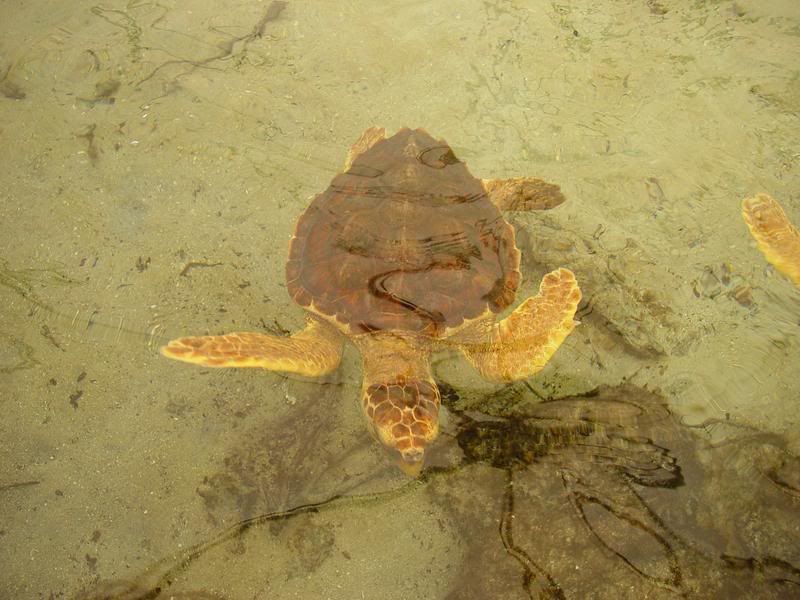
Juvenile loggerhead at Gumbo Limbo Nature Center

If you live near nesting grounds or plan to visit them, please visit S.T.O.P.'s website to learn about sea turtles, their habitat, and what you can do to help protect them. And if you live in the South Florida area, why not think about volunteering your time to help the next generation of sea turtles make it to the sea? All you need is a bucket, a red-light flashlight, and the willingness to go enjoy the ocean breezes and the crashing of the surf for a few hours!


Wednesday, March 28, 2012

Fat Vegans: Why We Matter

Well, PCRM is at it again, this time with a more subtle form of body-shaming in their latest ad campaign. In their newest campaign, targeted at an airline, they suggest a surcharge to sit next to a vegan -- who is of course portrayed as a thin, beautiful blonde woman. It's lovely that they can piggyback off of the airline industry's own record of fat-shaming and play on people's fears that others will be unhappy to share a seat with them or that they will be forced to pay for a second seat. How efficient. (For anyone who may have missed this as an issue, let me assure you, it's one of the most commonly asked questions in the popular Fatshionista community: "How will the airline I'll be taking treat me?". There are also horror stories of very public humiliations.)

Since my initial post about PCRM's body-shaming anti-cheese campaign, I've been engaged in a lot of discussion with folks about obesity and the dangers thereof, nutrition, junk-food, and stigma. I've spoken to people who are as upset by it as I was, people who respectfully disagreed (including PCRM's president himself), and one very angry fellow vegan who told me to "go have another doughnut" because my lack of sudden and startling weight-loss upon changing my diet surely meant I was a "junk-food vegan." (That's exactly the response I expected PCRM's ad to elicit towards fat folks, by the way. No surprise there.)  What no one is talking about is the very heart of PCRM's campaign, similar campaigns from PETA, and the obesity "epidemic" itself: fear and shame.

Virtually every person in this country falls into one of two categories:
1. those who live in fear of being fat
2. those who are ashamed because they are fat.

Stop and think about it for a second. Isn't that sad? Where are the people who are happy with their bodies, exercising because they love the feeling of being active, enjoying food without worry, and making rational eating decisions on the basis of health rather than weight? I know they exist, but how few and far between they are! Most of us are watching every bite with anxiety, looking for ways to cram in another thirty thoroughly repetitive minutes at the gym, and still not liking what we see in the mirror.

Why is there so much fear and shame associated with weight? The medical community will tell you it's because obesity is unhealthy. Sociologists disagree, since the cultural shift in thinking about weight pre-dates most research on the related health issues. But whatever the reason, the most important thing to understand is that it's counterproductive.

There is something fundamentally wrong with the tone of our discussions about obesity and health. The proof? The majority of research about weight and health has come out in the last 30 years. What has happened to global obesity levels in that time period? Global obesity levels have doubled in that time frame, according to a 2011 study in the Lancet. The more afraid we become, the fatter we are.

Let me be clear, I'm not saying that's the reason behind the weight gain. Contrary to what PCRM's cheese = obesity ad campaign suggests, obesity is a multi-factor problem. They're right that the increase in average cheese (and meat) intake are probably big reasons. But dozens of things have happened in the last three decades that have an impact on waistlines - for example, the rapid decrease in families with the luxury of a stay-at-home parent to do the cooking, the increase in availability and affordability of unhealthy 'convenience' foods, and the decrease in levels of physical activity.

What I'm saying is that in addition to the weight we've gained as a society, we've gained the knowledge to know it has associated dangers. So why, armed with this knowledge, do we not manage to win the fight against obesity? Because fear and shame are paralyzing feelings, not empowering ones.

And that, right there, is why fat vegans matter. Our very existence is empowering to others considering taking the vegan plunge. It obliterates the gaunt-and-sickly vegan stereotype. It shows that people of any size can live on a plant-based diet without feeling like they're starving. It makes people feel that there are others still on the journey to health who can understand them. It lets them know they can be vegan without being ashamed of not being their "ideal" weight.

I'm not saying that being obese is the healthiest state of being. But isn't being a fat vegan healthier than being a fat carnist? Of course it is.

I'm proud of the positive steps I've taken for my health, and I don't make weight the measure of my success in those attempts. Veganism has given life-changing health benefits to me. I've gone from very ill to very healthy. I'd hate to think of anyone being denied that kind of improvement in their health because they felt ashamed, afraid, feared being judged, or felt that they wouldn't be accepted. So if you, like PCRM, are concerned about other people's weight issues, empower and encourage them; don't shame them.

Lest we forget, veganism is about so much more than weight and health. No matter what I weigh, my conscience is light as a feather!

Friday, January 27, 2012

My faith renewed in PCRM

Just over a week ago, I posted an open letter to PCRM regarding their foray into what was formerly PETA's exclusive territory: body-shaming imagery in their campaigns. When PCRM President Dr. Neal Barnard posted  in his blog about the subject five days later, I assumed that was all the response I could hope to receive. I am happy to report that I assumed incorrectly. Yesterday, Dr. Barnard responded directly to my concerns.

I won't rehash the entire dialogue here, as many of Dr. Barnard's points were already covered in his blog. At this point, we still disagree over whether the images were shaming. But what really impressed me was his genuine acknowledgement of my concerns and his openness to discussion. In fact, Dr. Barnard closed:
Will some people be upset? They might be, and I would value your thoughts about how best to deal with that. But our focus, of course, is to try to stop a deadly problem.  
So that’s our take on it. But, needless to say, we’re all in this together. So if you have a better idea, please send it along, and we’ll certainly look at it.
I did, therefore, send along a suggestion for another way to frame the message. (Messaging is my day job, after all.) I hope that he will find it useful. I also shared with him information about the Headless Fatties Phenomenon, such as this article on research from Yale that led to the establishment of guidelines for how to responsibly present obese people in the media. I hope that he will see my point about the ineffectual and stigmatizing nature of such imagery. But even if we continue to disagree, my faith in PCRM as an organization that cares about people has been restored.

Thank you, Dr. Barnard!

UPDATE: I re-thought all of this, following a big realization.

Monday, January 23, 2012

Why vegans should care about wildlife

Bison, hunted nearly to extinction, were brought back from the brink by
careful conservation efforts.

If you’re vegan, chances are high that you care deeply about animals. It may be that your love of domesticated animals - be they dogs, cats, horses, cows, or chickens - is what brought you to a compassionate lifestyle in the first place. It’s also likely that you spend time advocating for companion animals or farmed animals. But what place does wildlife have in your interests? Do you view wildlife protection as a vegan issue?

For those who are vegans for ethical reasons, the answer to this question likely seems obvious. Ethical vegans, who live by the principle that animals are not humankind’s to exploit, generally extend that belief to all animals. They recognize that indirect threats to wildlife, such as environmental pollution or habitat destruction, still constitute human exploitation of these creatures.

But people adopt a vegan diet for many reasons: some who adopt a plant-based way of eating for health or in opposition to food policy or factory farming methods may not consider the protection of wildlife as part of their ideology. For those who are vegan for health or food safety, the issue may not seem so clear. Why should these people care about wildlife?

Wood storks are threatened by pollution of their food
supply and destruction of their habitat.


According to a Humane Society of the United States, animal agriculture as an industry is the single largest user of land worldwide. For those whose veganism is based in an opposition to factory farming methods, consider this: animal agriculture has a direct impact on wildlife through the destruction of habitat. Once lands are cleared for livestock production, wild animals that remain in neighboring habitat are killed if they present a potential threat to farmed animals, or the crops grown to feed livestock. Moreover wildlife is killed in the production of livestock feed crops, which account for as much as 50% of the total crop yield globally.
 
For those who adopt a vegan diet for health reasons, consider that the same indirect effects of animal agriculture that affect wildlife - environmental pollution, pesticide usage, contribution to climate change - also affect you. (To learn more about the impact of animal agriculture on climate change, see this HSUS report.) You are part of the ecosystem just as wild animals are. Your water and soil is being polluted, the climate you live in is changing. By fighting to limit the effect of animal agriculture on wildlife and the lands they inhabit, you are limiting the impact on yourself as well.


Every species - human, animal, or plant - is part of the delicate balance of life on this planet. All are interrelated and need to be preserved. While it may seem that fighting the factory farming industry is enough to take on, remember: compassion is a renewable resource. Do your part to preserve and protect all animal life!


(Authored by me, photos by me, originally posted at http://www.thisdishisvegetarian.com/2012/01/why-vegans-should-care-about-wildlife.html)

Thursday, January 19, 2012

A fat vegan to PCRM: Abandon fat-shaming, ineffective ads!


One of the ads in question. This is fat-shaming, misleading,
and worst of all, ineffective.
Open letter to PCRM sent via:
Vaishali Honawar, vhonawar@pcrm.org
Physician's Committee for Responsible Medicine
Media Contact, Your Abs on Cheese Billboard Campaign

Dear Dr. Barnard and PCRM,

I am a long-time admirer of PCRM, since I was first invited on behalf of my organization to apply for PCRM's Humane Charity Seal of Approval in the early 2000s (a seal we were granted and maintain to this day). I frequently refer individuals to your website, and just last month was privileged to interview a member of your staff for an article I wrote about PCRM that was published on the popular vegan news site This Dish is Veg. So it pains me to tell you how deeply disappointed I am in PCRM's new fat-shaming ad campaign.

There are so many reasons this campaign is disturbing. To begin with, PCRM is an organization I have always relied on for accurate medical information pertaining to a vegan diet. How is it accurate or responsible to suggest that a person cannot be thin while eating cheese, or fat on a vegan diet? We all know that's preposterous. Yes, the standard American diet contributes to obesity, but not all carnists are fat, nor are all vegans thin. This oversimplifies the complex issues surrounding obesity and will therefore be written off as false by thinking individuals, rather than accomplishing the goal of making them consider their dietary choices.

Furthermore, as a fat vegan, I find this campaign personally offensive because of the shaming nature of the imagery. It's hurtful to those of us who already struggle for acceptance within the vegan community because we don't fit the stereotypical image of the skinny vegan. And for fat individuals who may be considering the switch to a vegan lifestyle, it's alienating rather than inviting. 

Finally, PCRM has a long history of taking the high road, relying on scientific fact rather than shocking imagery. When you sink to the level of other organizations that use shock value to stimulate discussion, you lose your credibility and gain opponents rather than friends.

Please, for the sake of the vegan community and your reputation for "Responsible Medicine," abandon this negative, harmful, ineffective campaign tactic.

Sincerely,

Kasey Minnis

Monday, January 16, 2012

The legacy of Dr. Martin Luther King, Jr. for animal advocates


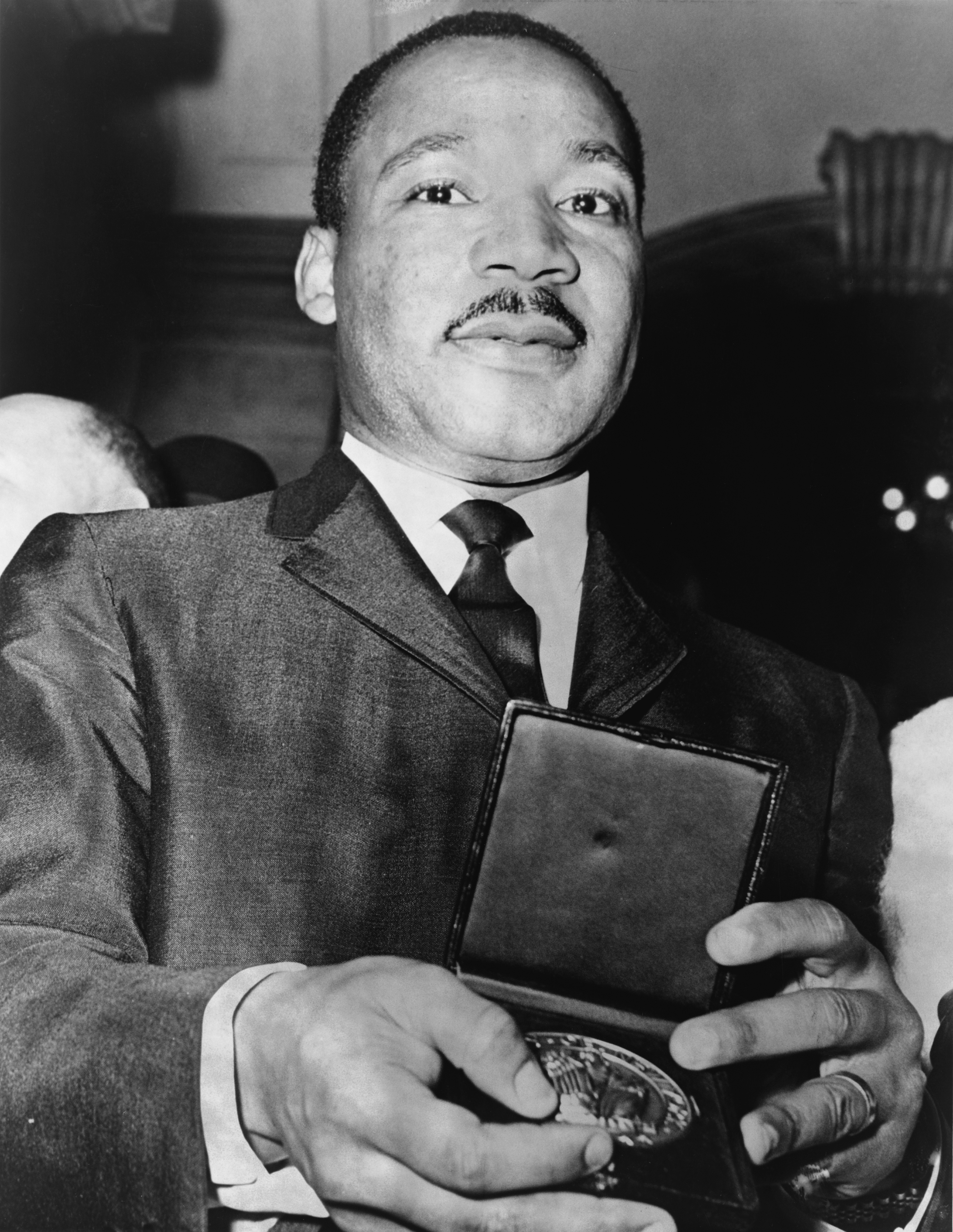
By Phil Stanziola, NYWT&S staff photographer [Public domain], via Wikimedia Commons

Today, the country honors the memory of a great leader in the fight for civil rights in America, Dr. Martin Luther King, Jr. While King’s focus was on human rights rather than animal rights, his passionate belief in non-violence and the value of all living beings has led many to believe that veganism is the natural extension of the philosophy he espoused. Those who believe this included his late wife, activist Coretta Scott King, who was vegan for a decade prior to her death, as well as his son, Dexter Scott King, who has been vegan and an animal advocate for over 20 years.

Here are some inspiring words from Dr. King for animal advocates:

“The hope of a secure and livable world lies with disciplined nonconformists who are dedicated to justice, peace and brotherhood.”

“The question is not whether we will be extremists, but what kind of extremists we will be... The nation and the world are in dire need of creative extremists.”

“He who passively accepts evil is as much involved in it as he who helps to perpetrate it. He who accepts evil without protesting against it is really cooperating with it.”

“Never succumb to the temptation of bitterness.”

“All I'm saying is simply this, that all life is interrelated, that somehow we're caught in an inescapable network of mutuality tied in a single garment of destiny. Whatever affects one directly affects all indirectly.”

“At the center of non-violence stands the principle of love.”